Smoking cessation

Quit smoking — this time with medicine on your side

You have probably tried on willpower alone. Nicotine dependence is a real, neurobiological condition — and it responds to medical treatment. A pulmonologist-led program: evaluation, a personalized plan and follow-up for a full year.

English-speaking Trained at the INER 12-month follow-up Central Benito Juárez

Why willpower alone keeps losing

Nicotine rewires the brain's reward system: the craving is your neurochemistry asking for its dose, not a character flaw. That is why smoking is treated as a disease — combining craving management, behavioral strategies and medical accompaniment. Treated this way, your odds of quitting for good multiply compared with going cold turkey on your own.

How the program works

1

Full evaluation

Your smoking history, degree of nicotine dependence, previous attempts and general health — plus a baseline spirometry to measure your lung function today and detect early damage such as COPD.

2

Personalized plan

Behavioral strategies plus, when appropriate, first-line combined medical therapy — chosen and prescribed in consultation according to your profile and contraindications. Not a one-size-fits-all product.

3

Follow-up for a year

Visits at 2, 4, 8, 12 and 24 weeks and at 6 and 12 months — in person or by video. Frequent at the start, when cravings peak; spaced out as your new normal takes hold.

What changes when you stop

Within months

Cough and breathlessness improve; airways start to clear. Many patients feel the difference climbing stairs before the first follow-up spirometry confirms it.

At one year

Cardiovascular risk falls by roughly half compared with when you smoked. Your heart notices before you do.

Over the years

The risk of lung cancer and chronic lung disease drops substantially. If damage such as COPD already exists, quitting is the single most effective treatment.

If you relapse

Relapse is part of the process, not the end of it. We review what happened, adjust the plan and continue — most ex-smokers needed more than one serious attempt.

5.0
36 verified reviews
Google
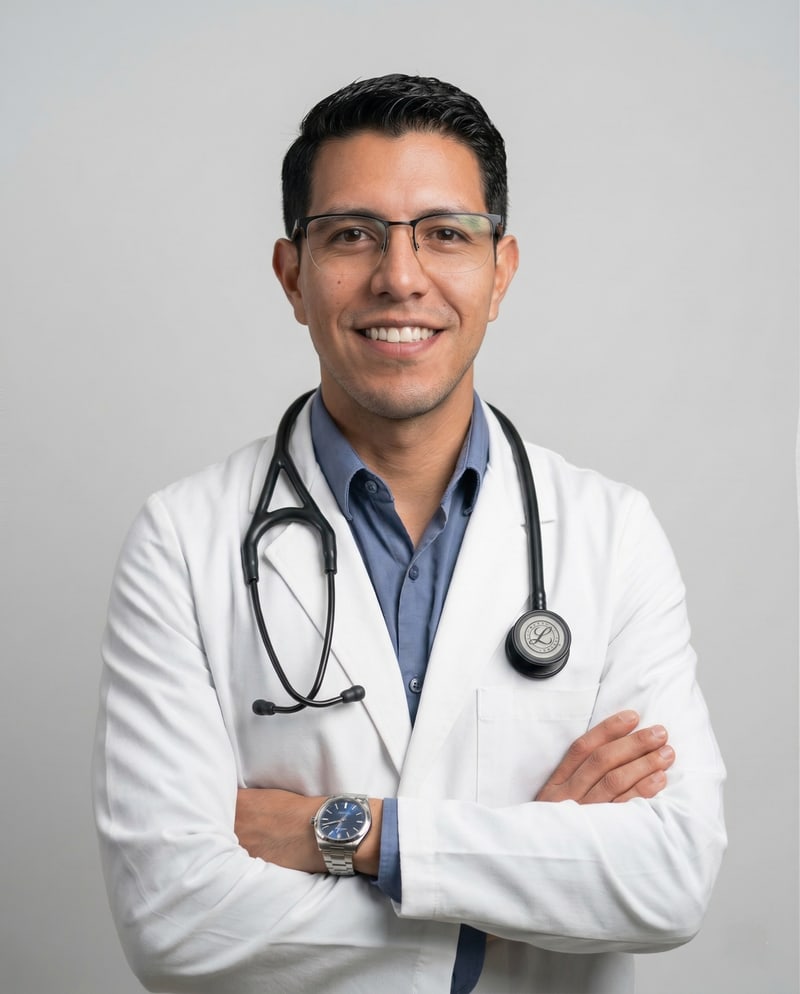
Dr. William César Lara Vázquez, pulmonologist in Mexico City
Dr. William César Lara Vázquez — Pulmonologist (Neumólogo) Trained at the INER (National Institute of Respiratory Diseases). Board-certified by the Consejo Nacional de Neumología (CNN-2102). Professional licenses verifiable with Mexico's SEP (12588976 / 15595809). Office at Hospital Santa Coleta, Saturnino Herrán 59, San José Insurgentes, Benito Juárez — Monday to Friday, 4:00 to 9:00 pm.
Full profile → · Consultation details →

Quitting smoking — frequently asked questions

What does the quit-smoking program consist of?
It is a medical smoking-cessation program with three pillars: a thorough evaluation of your nicotine dependence, a personalized plan — behavioral, and pharmacological when appropriate — and structured clinical follow-up. It is not a pep talk and a pamphlet.
What medication will I take?
The approach may include first-line combined medical therapy, chosen and prescribed in consultation according to your profile, contraindications and preferences. Which option fits you is a clinical decision made with you, after your evaluation — not a one-size-fits-all product.
How long does the follow-up last?
The plan extends up to 12 months: an initial evaluation and follow-up visits at 2, 4, 8, 12 and 24 weeks, and at 6 and 12 months — more often if your case requires it. That first year is when accompaniment most reduces the risk of going back to smoking.
What happens if I relapse?
A relapse is part of the process, not a failure. We review what happened, adjust the plan and continue. Most people who quit for good needed two or three serious attempts before it stuck.
Will you check how my lungs are doing?
Yes. The evaluation includes a baseline spirometry to measure your lung function today and detect early damage such as COPD. It gives you a measurable starting point — and a number you can watch improve.

This attempt can be the last one you need

Educational information reviewed by Dr. William César Lara Vázquez (last reviewed July 2, 2026). It does not replace an in-person consultation, diagnosis or treatment; any medication is prescribed only after a medical evaluation. In a respiratory emergency in Mexico, call 911. COFEPRIS advertising notice 2609142002A00265. Your personal and health data are handled under Mexico's LFPDPPP; see the privacy notice.

Información educativa revisada por el Dr. William César Lara Vázquez; no sustituye la consulta, el diagnóstico ni el tratamiento médico.